Describe the work
The user defines the goal of the task in natural language, and the Digital Worker proactively asks for the details it needs. At this stage, the user provides access to relevant data sources, tools, and integrations.

Digital Workers
AI Agents built for business processes that adapt, collaborate, and operate with full accountability and transparency
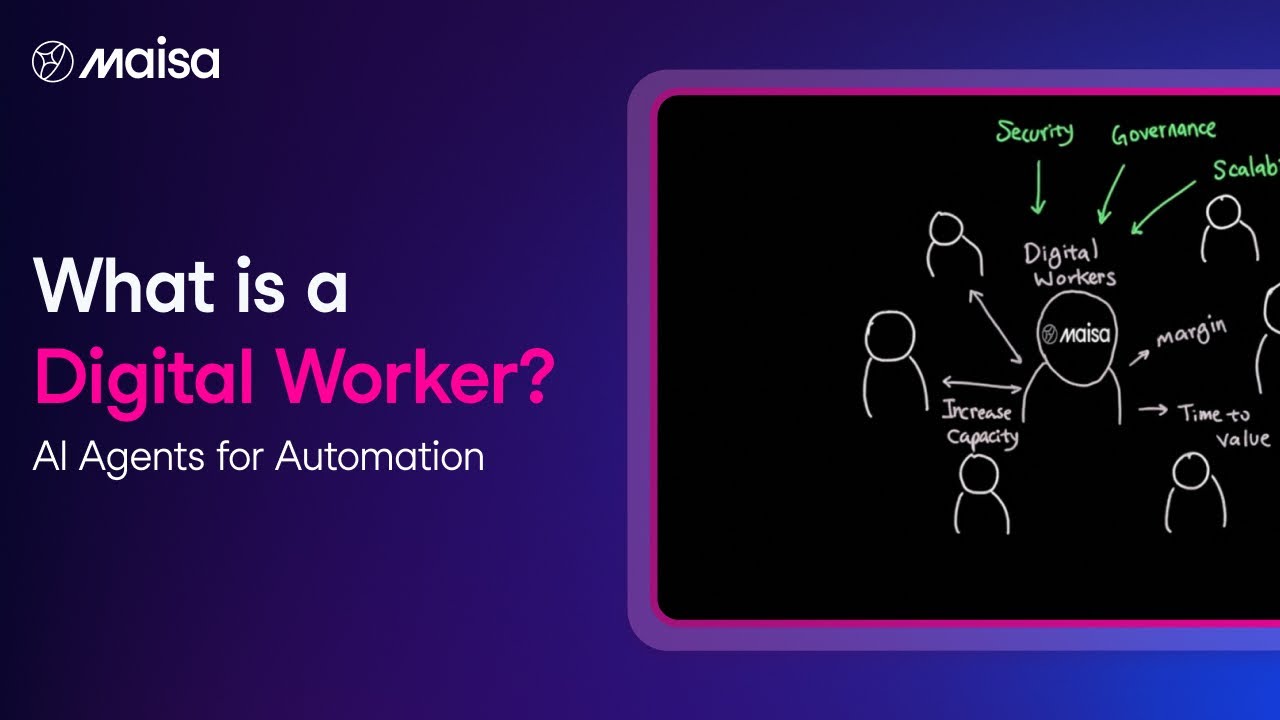
Digital Workers are AI Agents built to execute tasks within business processes. They adapt to changing conditions, make decisions, and interact with both teams and tools to complete work. Unlike traditional automation, Digital Workers operate with clear goals and follow the logic of the process. They handle complex tasks that require reasoning, communication and judgement while keeping every step traceable. They are built for operational environments where work changes often and where traditional automation falls short.What are Digital Workers?
Most business processes mix predictable steps with those that demand interpretation, validation, or decision-making.
AI Digital Workers can automate these processes while preserving control, adaptability, and auditability.
Traditional automation tools follow fixed rules, failing when work demands judgment and flexibility.
Conventional AI solutions could process complex information but they act as “black boxes”, making it difficult for organizations to trust or audit their outputs.
Digital Workers solve both problems. They adapt to real operating conditions, follow business rules, and leave a transparent trail of their decisions. This allows companies to automate work that was previously too variable, too risky, or too costly to automate.
Our Digital Workers are built for enterprise processes and the operational demands that come with them: traceability, workflow awareness, adaptability, and effective collaboration.
Every action and decision is captured in a detailed execution log, what we call “Chain of Work”. Teams can review how data was interpreted, which rules were applied, and why a decision was reached. This level of visibility makes the automated work fully auditable. Digital Workers operate within business workflows, knowing when to seek approval, escalate issues, or notify the right people. They reinforce business rules rather than working around them. Instead of following static scripts, Digital Workers pursue goals. When conditions change or information is missing, they evaluate alternatives and select the path that gets the task completed correctly Most processes rely on information scattered across systems, emails, documents, and databases. Digital Workers can interpret both structured and unstructured data and use it to drive decisions or trigger further actions.Traceability and accountability
Works with teams and stakeholders
Adaptive problem-solving
Understand business data
Setting up a Digital Worker is simple and doesn’t require technical expertise. Domain experts, those who know the process best, can configure it directly.
The user defines the goal of the task in natural language, and the Digital Worker proactively asks for the details it needs. At this stage, the user provides access to relevant data sources, tools, and integrations.
The Digital Worker operates in review mode, allowing teams to evaluate its decisions and refine workflows through feedback in natural language before implementation.
After validation, the Digital Worker begins handling tasks, improving over time based on operational feedback and real-world experience.
A Digital Worker isn’t a single model or script. It’s a coordinated system organized into three layers that mirror how people work: Perception, Reasoning, and Execution.
This layer collects and interprets incoming information: documents, emails, forms, system data, or manual inputs.
The information is categorized and converted into structured representations the Worker can use.
Here, data is analyzed and broken into actionable steps.
Large language models and Maisa’s Knowledge Processing Unit (KPU) collaborate to map out the tasks required to reach the desired outcome.
The KPU enforces rules, validates outputs, and keeps reasoning grounded in verifiable data, always backed by code. Making it hallucination-resistant.
Guided by the decisions produced in the reasoning stage, the Digital Worker carries out actions across enterprise systems.
This includes API calls, UI interactions, data entry, document generation, and cross-system workflows.
A key difference between basic bots and Digital Workers is how they use tools.
Digital Workers interact with business applications as a skilled employee would, consistently and without supervision.
AI automation is increasingly appealing, especially in regulated industries like financial services, insurance, and healthcare.
But most AI agents fail because they lack transparency. Their reasoning is hidden, their decisions are difficult to audit, and errors go unnoticed.
LLMs can generate convincing but incorrect outputs. In a business environment, this is unacceptable.
You cannot deploy automation you cannot trust.
Maisa avoids this by pairing LLMs with the KPU, which enforces structured, verifiable reasoning, backed by the determinism of code.
Every decision leaves a trace:
– What data was accessed
– Which rules were applied
– Why the decision was made
Managers can inspect any step of the process when needed.
Maisa Digital Workers behave like accountable digital employees whose work is verifiable, reviewable, and adjustable.
Traceability is great only if it’s backed up by enterprise level security. This is why Maisa’s digital workers are built on the basis of most advanced security protocols for regulated environments..
with transparent data handling and governance.Supports GDPR and EU AI Act compliance
Processing occurs inside the customer’s secure perimeter.
and isolation.
Digital Workers recover from unexpected situations, missing data, or workflow changes by selecting alternative paths rather than stopping the process.
Our digital workers learn directly from the workflow and do not rely on endless training cycles or complicated setup. Maisa learns by actually working, like us humans do.
They work seamlessly with structured or unstructured data, documents, emails, and system interfaces, enabling automation across diverse channels.
Problem: High-volume trade finance workflows depended on manual checks of contracts, invoices, and certificates, creating long turnaround times, compliance risk, and limited scalability.
What the Digital Worker does: Reads and validates all trade documents (even low-quality scans), cross-checks terms and beneficiaries, identifies discrepancies, and produces audit-ready summaries, end to end.
Business Impact: 6× capacity increase, 80% faster processing, and 93% automation accuracy across regions.
Problem: Loan applications required multi-document verification across languages and formats. Legacy OCR/ML tools delivered low accuracy, causing delays, manual review, and customer frustration.
What the Digital Worker does: Classifies documents, extracts all required fields with context awareness, validates data against business rules, and produces consistent structured outputs for decisioning.
Business Impact: 98% extraction accuracy, 3× faster processing, and an 85% reduction in manual review effort.
Problem: POA verification relied entirely on manual interpretation of legal documents with inconsistent formats, slowing onboarding and creating compliance bottlenecks.
What the Digital Worker does: Understands legal clauses, verifies authority, cross-checks identities, routes exceptions intelligently, and keeps each decision fully traceable for audit.
Business Impact: 40,000 hours recovered annually, minutes instead of hours per verification, and €1.2M saved in the first region.
Digital Workers combine intelligent decision-making with the structure required in real operations.
They can understand objectives, follow business rules, and adapt to changing environments, making them reliable for processes that are impossible to figure out for traditional automation.
They coordinate actions across systems, interpret both structured and unstructured data, and manage exceptions without losing traceability. This allows them to execute end-to-end workflows with consistency, accuracy, and full operational oversight.
For businesses, the benefits are clear: faster cycle times, fewer errors, stronger compliance, and reduced operational load.
Digital Workers extend the workforce with a dependable, scalable layer of automation that operates with the same clarity and accountability expected from human teams.
Start automating the impossible